In the first semester of 2026, Daniel conducted a workshop on Marketing Anthropology at Duksung Women’s University. Among the presentations, he introduces a fascinating case study highlighting Gen Z’s perfume consumption behaviors.
Beyond the Scent: How Gen Z is Redefining Perfume Consumption: Case Study of Tamburins
By Hee-joo Yoon (major: business administration) and Su-min Lee (major: anthropology)
When you shop for perfume, what is your primary decision-making factor? Most people would instantly answer that it is the scent. However, in the world of Gen Z consumerism, traditional retail rules are being turned completely upside down. By employing architectural observation and deep-dive interviews, this research focuses on the hit brand Tamburins to uncover why Gen Z buys perfume for reasons that go far beyond the physical scent.

Experiential Rituals: When a Store is a Museum
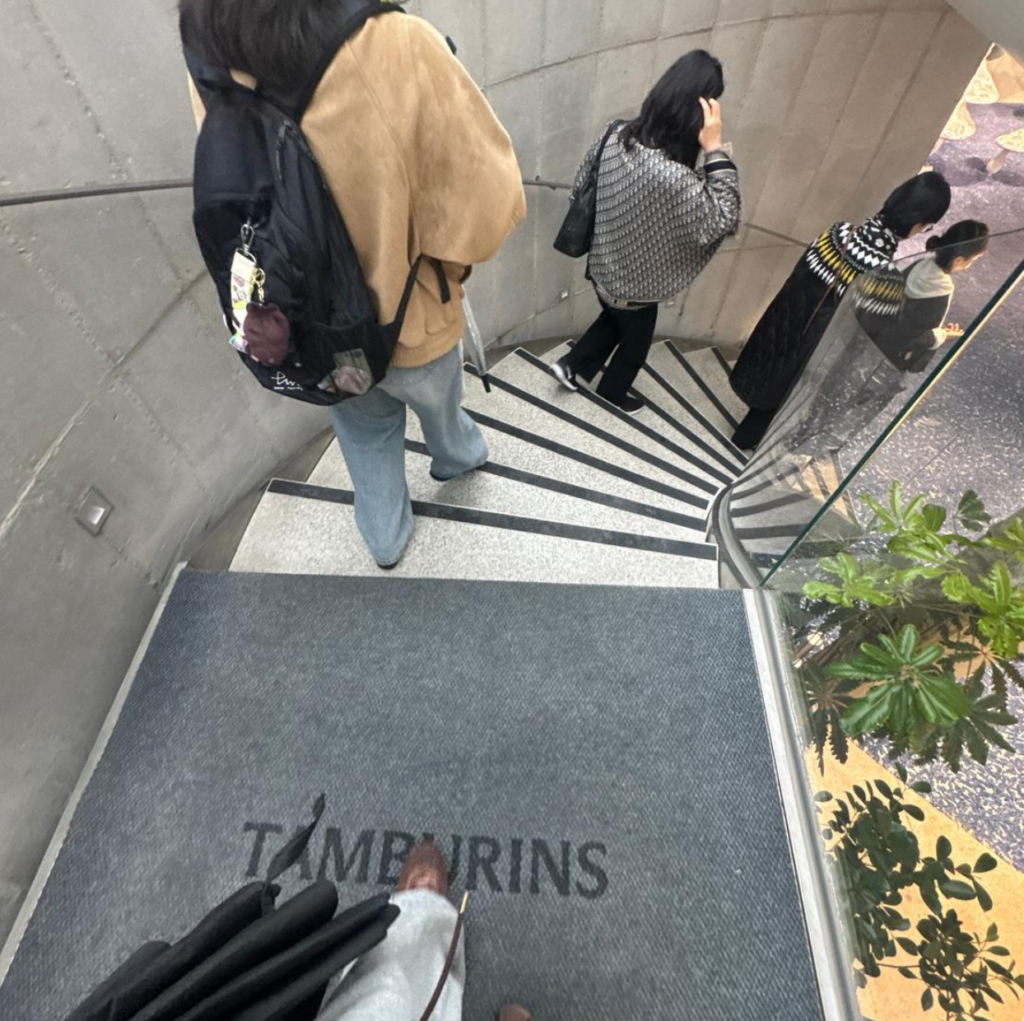
Walk into a Tamburins flagship store, like the one in Seongsu, and you might wonder if you accidentally stumbled into a contemporary art museum. The space is dominated by massive mushroom art installations and high-tech media displays that captivate visitors from the start. According to Victor Turner’s Ritual Process theory, the spatial layout of the store carefully crafts a transition from daily life into a branded universe.
This begins with a sense of separation at the ground level as you step away from the busy street. It moves into a liminal, transitional phase as you descend the stairs, leaving reality behind to enter the underground showroom. Interestingly, the study observed that consumers do not reach for their phone cameras during the actual smelling phase, but rather whip them out the moment they encounter the visual art installations. Gen Z is buying into the curated aesthetic long before they actually experience the physical product.
The Curated Performance: Staff as Museum Docents
What makes the Tamburins retail experience truly fascinating is how it subverts standard commercial sales. Instead of acting like traditional retail workers pushing for a quick transaction, the staff behave like museum docents guiding visitors through an exhibition.
To heighten the sense of ritual and exclusivity, the main product descriptions and recommendations are not just picked off a shelf. Instead, staff personalize the experience, making it deeply mysterious by stepping behind heavy curtains to retrieve smelling papers, each carefully inscribed with handwriting. This theatrical element elevates perfume shopping into an intimate, hidden performance, adding a layer of mystery and sacredness to the purchase process.
The Landscape of Scents: Translating Fragrance into Scenery
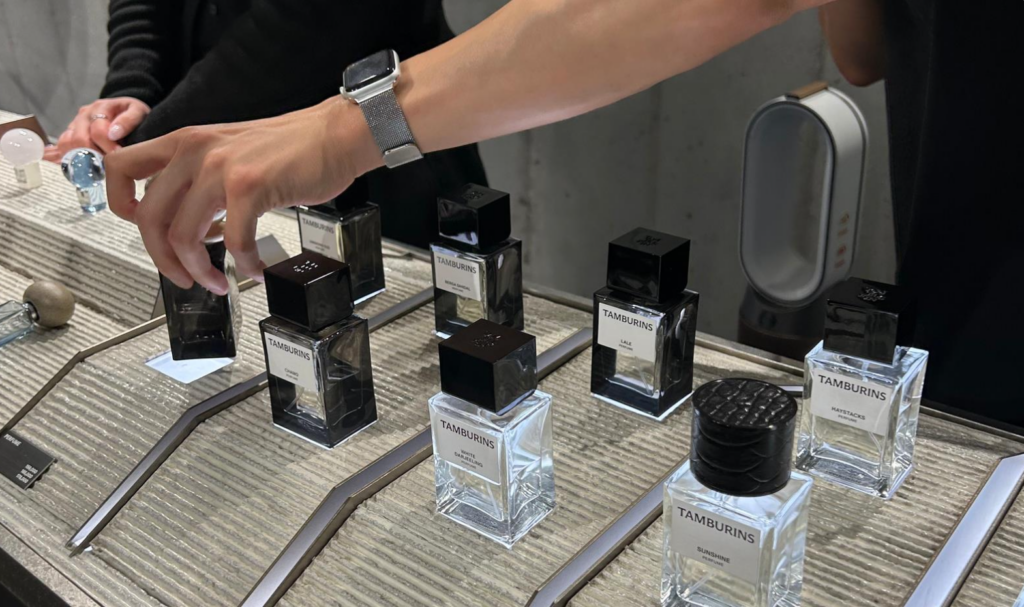
Because scent is invisible and difficult to communicate, Tamburins employees utilize a fascinating marketing technique, which can be termed “The Landscape of Scents.” Instead of rattling off chemical top notes, sales representatives translate smell into vivid, cinematic imagery. For example, they might describe a fragrance as smelling like “a misty, mossy forest,” or “the crisp night air over the Han River.”
By doing this, the brand does not just sell a perfume; they sell a scene. This approach also provides seasonal justification, such as advising that a scent is perfect for the changing weather, and seamlessly anchors environmental sensory experiences directly to their products.
The Paradox of Self-Satisfaction
When interviewed, Gen Z participants overwhelmingly claimed they wear perfume purely for self-satisfaction. However, a deep dive into their actual behaviors revealed a glaring contradiction to this narrative. Participants admitted they rarely wear perfume when staying home or doing solitary activities. One participant noted they would literally turn back home to get their perfume if they forgot it for a social gathering, feeling completely incomplete without it on that specific day. Another noted they refuse to wear their expensive perfume to part-time jobs because they do not want to waste it on the people they encounter there.
This aligns perfectly with Erving Goffman’s Self-Presentation Theory. Perfume is not viewed as a basic hygiene tool to remove body odor, which Gen Z categorizes strictly under soap or deodorants; rather, it acts as a deliberate aesthetic layer used to communicate identity on a social stage.
The Brand vs. Product Memory Dilemma
Despite Tamburins’ wild success in creating cultural buzz, the research highlighted a critical pain point for the brand regarding the asymmetry of memory. While consumers have incredibly vivid memories of the brand’s aesthetics, they have highly fragmented memories of the actual products.
On one hand, brand memory remains exceptionally sharp. Consumers easily recall the immersive Seongsu flagship store layout, the massive iconic mushroom installations, and high-profile celebrity ambassadors like Jennie or Felix. On the other hand, product memory is relatively soft. Spontaneous recall of fragrance names is highly limited outside of their hit scent, Chamo, and consumers often struggle to identify a unified product identity or a sense of historical heritage and prestige.
Consequently, interviewees positioned Tamburins in an awkward middle ground between mass-market commercial fragrances and luxury heritage perfume houses like Chanel, Diptyque, or Byredo. This reveals that while celebrity endorsements successfully drive initial awareness and curiosity, they ultimately fall short of building long-term trust in the complexity and quality of the fragrance itself.

Key Takeaways:
Aesthetics open the door, but the product anchors the room: Visual experiences and influencer triggers work beautifully for initial brand discovery, but long-term loyalty requires standalone product memorability.
Bridge the gap between message and substance: Gen Z consumers are highly perceptive. If a brand promotes hyper-individuality through its artistic marketing but offers a safe, highly mass-appealing scent, consumers will quickly spot the discrepancy.
Ultimately, Tamburins has proven that Gen Z does not just buy a product; they buy the architecture, the narrative, and the social currency that comes wrapped inside it.